
“We never thought of ourselves as witches, my mother and I. For this was a word invented by men, a word that brings power to those that speak it, not those that it describes. A word that builds gallows and pyres, turns breathing women into corpses.”
I have always been drawn to stories about magic. Growing up, my house was filled with salt lamps and tarot cards, so it’s no surprise that I own my own salt lamp and Jane Austen-inspired tarot cards. Most of the stories I read as an adult are of the fantastic so I can escape reality and enter worlds filled with wonder and adventure.
Another topic I gravitate towards is witchcraft. A lover of history, the topic of witches (read: powerful women that scare men) has always fascinated me. From witch trials dating back to the 15th century to the Salem Witch trials just one state over, I am always interested in reading tellings/retellings of those moments in history. So, naturally, when I saw that Weyward was a book about witches, I immediately snatched it up.
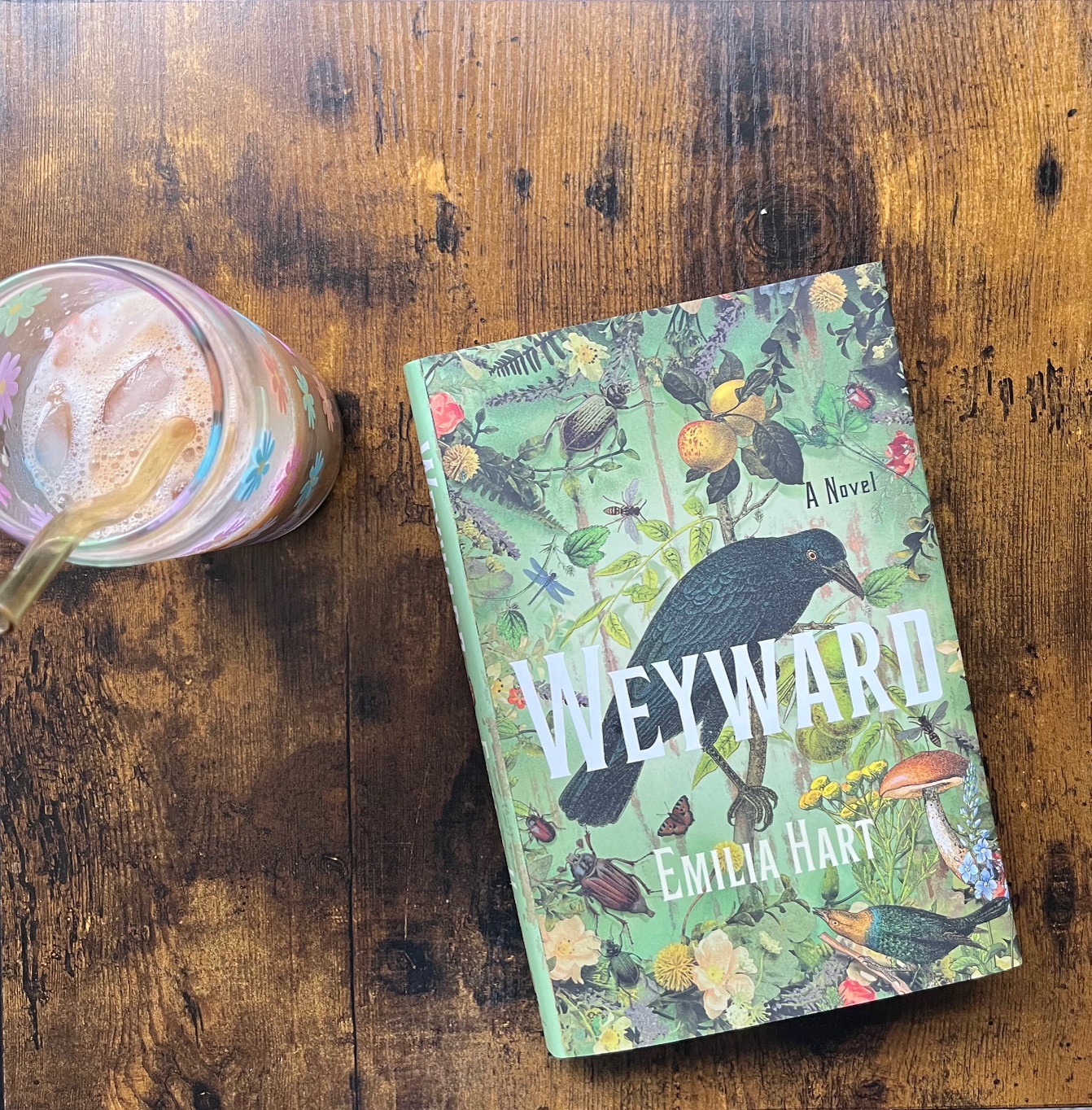
Weyward’s cover just screams “uncanny.” A crow dominates the front cover, and it is surrounded by insects and other naturalistic elements. As we enter one of my favorite seasons (spring), I am reminded of my love of all things that grow (now I sound like a Hobbit, but it’s true). These days, I spend a lot of my time outside, fingers brushing the buds on the trees and tending fresh earth, getting ready for planting season. It is in these moments of deep appreciation for the earth and nature that I feel the most “witchy” and those sentiments rang true for the Weyward witches in the book.
For the Weyward witches are drawn to nature; in fact, it’s what sustains them. Their connection to insects and soil is what keeps them alive and powerful. That concept was so comforting to me, for I too feel that way on a very spiritual level (maybe not about the insects). The book follows three storylines: first, Altha, who is being tried for witchcraft in the 17th century; second, Violet, a sixteen-year-old girl who is disinherited and learns more about her lineage in the 1940s; and third, Kate, who is running from an abusive marriage in 2019. Violet, her great aunt, left Kate the cottage in her will, and while in Crows Beck, Kate discovers her connection to the Weyward witches.
While the cover is pretty, the book and content itself are not. And I feel like that was the author’s point. While every storyline ends with each woman reclaiming their narrative, Altha, Violet, and Kate go through very traumatic experiences to get there. I felt uncomfortable with a lot of the triggers in the book (r*pe, sexual assault, physical abuse, miscarriage, pregnancy loss, abortion, suicidal ideation, suicide attempts, animal abuse, the list goes on and on), but honestly, that’s the way that life was and continues to be for women. My attempt to escape the world through fantasy was thwarted by Hart’s book, and I believe that was her intent.

 KEEPITKASSUAL
Leave a comment